Tarte Tatin: The True Story of an Upside-Down Dessert
The Tatin Sisters, Sologne, Curnonsky, and Maxim’s: The True Story of the Tarte Tatin, the Dessert Baked Upside Down.
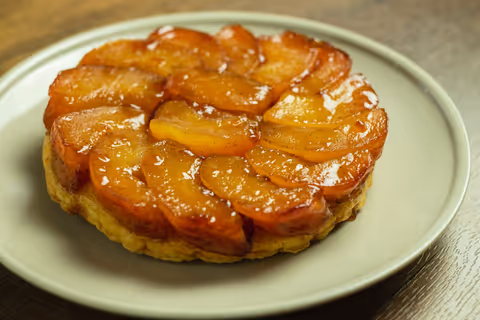
It’s baked upside down and eaten right side up. Melt-in-your-mouth apples, amber caramel, and a crispy crust placed on top and then flipped over just before serving: the Tarte Tatin has become one of the world’s most famous French desserts. It owes its name to two sisters who ran a hotel in Sologne in the late 19th century. But the recipe itself is undoubtedly older.
The Tatin Sisters, in Lamotte-Beuvron
Stéphanie and Caroline Tatin run a hotel-restaurant in Lamotte-Beuvron, in the Loir-et-Cher department. Their clientele consists of travelers and hunters who come for the forests of Sologne. Stéphanie works in the kitchen. According to the most widely accepted legend, one particularly busy day, she forgot to line her baking dish and placed the apples directly into the butter and sugar. To correct her mistake, she covered the fruit with dough and baked it, then flipped the tart over just before serving. Other versions say that the apples had overcooked and she added the pastry on top to save the dessert. The two sisters retired in 1906. The establishment still exists today under the name La Maison Tatin.
Accident or a Sologne recipe?
The charming story of a culinary mistake has its limits. The concept of an upside-down apple cake already existed: Antonin Carême describes it in *Le Pâtissier royal parisien*. And in Sologne, families had long been preparing apple or pear tarts cooked in butter and sugar, covered with dough, and then turned upside down. The Tatin sisters therefore probably didn’t invent anything. Rather, they perfected a local recipe and made it their establishment’s specialty.
From Sologne to Paris
Fame came after the two sisters’ deaths, in 1911 and 1917. The gastronome Curnonsky, a great champion of regional cuisines, helped popularize the “Tatin sisters’ tart.” The restaurant Maxim’s in Paris then added it to its menu, cementing its status as a classic. An anecdote claims that Louis Vaudable, the owner of Maxim’s, hired himself out as a gardener in Lamotte-Beuvron to uncover the secret of the recipe. This story is hardly credible: he was born in 1902, by which time the sisters had already closed their business.
An Upside-Down Recipe
The traditional version is prepared in a copper pan lined with butter and sugar. Apple wedges are packed tightly into the pan and left to caramelize over the heat. A thinly rolled shortcrust pastry is placed over the fruit before baking. It is turned out while still warm, with a swift motion, so that the caramel coats the apples. The tart is most often served with thick crème fraîche, whose tartness balances the sweetness. Since then, every chef has come up with their own version: puff pastry or shortcrust, thinly sliced apples layered like a mille-feuille, pears combined with apples, or caramel flavored with orange or honey.
Where can you find a good Tarte Tatin?
From Parisian bistros to pastry shops in Sologne, our reviewers have tasted the versions worth seeking out. Check out our selection of the best Tarte Tatins.