






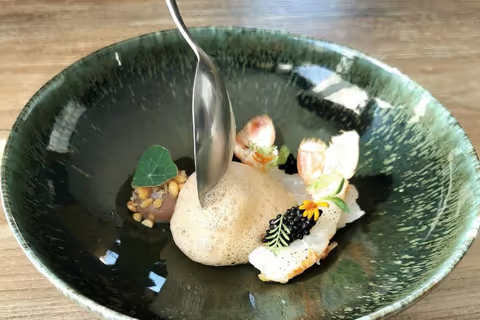
Roasted langoustines, banana and peanut compote, satay foam
Roasted langoustines with peanut banana compote and satay foam are a gastronomic challenge from Sens chef Alexandre Bru.
Serves 4
Preparation time: 1 h 30
Cooking time: 1 h 15
8 langoustines 10/15
Consommé of langoustines
- 1 carrot
- 1 celery stalk
- 1 onion
- 2 garlic cloves
- 20 cl cognac
- 3 sprigs fresh thyme
- 20 g tomato paste
Banana compote with peanut butter
- 4 bananas
- 20 g peanuts
- 10 g peanut butter
Scampi mousse with satay sauce
- 100 g butter
- 25 cl liquid cream
- 15 cl saté
Dressing
- 10 g smoked herring roe
- Herbs or edible flowers (for finishing)
- Salt, fleur de sel and pepper
1 - Prepare the langoustines: try to keep the tail and the last ring of shell (put the carcasses aside for the sauce). Set aside in a cool place until ready to cook: heat a frying pan over high heat, add a knob of butter, salt both sides of the langoustines and grill only the outer part of the body for around 45 seconds. Remove to an ovenproof dish.
2 - Make the langoustine consommé : chop the carrot, celery and onion, and crush the garlic. Pour the langoustine carcasses, garnish and thyme into a saucepan with a little olive oil. Cook over a low heat for 5 min. Remove from the heat and pour in the cognac, then set the contents alight (carefully, using a fire starter or lighter). Add the tomato paste, stir well, then add water up to halfway up the sides of the pan. Increase the heat to maximum until it boils, skim off any scum on the surface, lower the heat to a simmer and leave to cook for 30 min. Strain into a large bowl with a colander, discarding the carcasses and aromatic garnish. Bring back to the boil and reduce by half. Set aside to prepare the foam.
3 - Prepare the banana compote: bake the bananas in their skins for 15 min at 165°C (th. 5-6). Peel them to extract the cooked flesh, then blend it. Add the peanut butter and a little fleur de sel. Set aside in a saucepan off the heat, covered, to prevent a film from forming. Coarsely crush the peanuts with a knife. Set aside until ready to serve.
4 - Make the langoustine foam: heat the reduced langoustine consommé, butter, cream and saté in a medium saucepan. Keep warm, then tilt the saucepan slightly and blend with a hand blender while incorporating air into the sauce. A fine foam will form on the top, which can be collected with a tablespoon when serving.
5 - Finishing and serving: preheat the oven to 180°C (gas mark 6). Heat the sauce and banana compote and arrange around the plates. Once the oven is hot, place the langoustines in the oven for 1 min (for a nice pearly finish). Meanwhile, spoon the banana compote (or sauce pipette) onto the plate. Cover with the peanut crumble. Arrange 2 warm langoustines on one side, place the smoked herring roe on top, then add herbs, microgreens or edible flowers to decorate the langoustines and banana compote. Finally, add the scampi and satay foam to the center of the plate.