Where Do Profiteroles Come From? The History of a Bistro Dessert
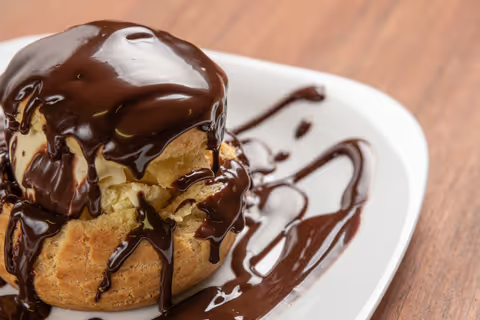
A choux pastry, vanilla ice cream, and chocolate sauce poured at the table. Behind this brasserie dessert lies nearly five centuries of history, from a chef who worked for Catherine de’ Medici to Antonin Carême.
We order it for the table, and we fight over the last cream puff with a spoon. The profiterole seems like a simple dessert, almost obvious. Yet it is the result of a long history, one that begins with soups, passes through royal kitchens, and eventually makes its way onto bistro menus.
A Name Derived from “Profit”
The word first appeared in the 16th century. It derives from “profit” and originally referred to a small bonus, an extra amount received in addition to what was due. In cooking, the term was first applied to savory dishes: small balls of dough or bread, filled with meat or stew, served in soups. Nothing to do, then, with today’s dessert.
The “pâte à chaud” of Catherine de’ Medici’s court
The history of the chou begins with that of its dough. According to tradition, it arrived in France in 1533, in the luggage of Catherine de’ Medici, who had come to marry the future Henry II. Among her Italian chefs, a certain Popelini (or Pantarelli, depending on the source) developed a dough that was dried over a fire before being baked. It was called “pâte à chaud.” He used it to make small pastries filled with fruit jelly, known as poupelins. Historians remain skeptical about the existence of this chef, whose name may have been derived from that of the pastry, but the principle of baked choux pastry does indeed date back to that period.
Avice and Carême Invent the Modern Choux Pastry
It wasn’t until the 18th century that the recipe truly evolved. The pastry chef Jean Avice, who worked for Talleyrand, reworked it and turned it into small, uniform choux pastries. The “hot dough” became choux pastry. His student Antonin Carême, the most famous chef of his time, perfected it in the early 19th century and established the recipe still used today: water, butter, flour, and eggs. It was he who came up with the idea of filling the choux with pastry cream or whipped cream and stacking them into croquembouches. He is often credited with inventing sweet profiteroles.
Ice Cream and Chocolate: The Brasserie Version
Ice cream did not replace pastry cream until much later, with the rise of ice cream parlors and the widespread adoption of refrigeration. Hot chocolate sauce—sometimes caramel—completes the dish. In the 20th century, profiteroles became a permanent fixture on the menus of Parisian brasseries and bistros. The contrast between the crispy choux pastry, the cold ice cream, and the hot chocolate makes it a classic dessert. Since then, pastry chefs have regularly reimagined it: a single, giant choux pastry; praline hidden inside; herb-flavored ice cream; or sauce poured at the table fondue-style.
Where can you find the best profiteroles today?
From affordable brasseries to luxury restaurants, our reviewers have tasted the versions worth seeking out. Check out our selection of the best profiteroles.