






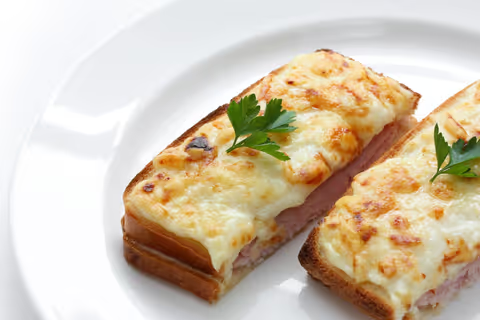
The croque-monsieur: its history and how chefs reinvent it
Bread, ham, cheese: the croque-monsieur is a timeless classic loved by all. Born in Parisian cafés in the early 20th century, this ultimate comfort food has never left the menus. Gault&Millau tells its story.

The ultimate comfort food, the croque-monsieur is a classic at Parisian brasseries (and beyond). Good bread, high-quality ham, oozing cheese and, why not, a creamy béchamel to top it all off… That is all it takes to delight our taste buds and comfort us without fail. But where does this hot sandwich with such a curious name come from?
Born in Parisian cafés
The recipe is said to have appeared in the 1910s, on the menus of Parisian cafés. An unverifiable anecdote credits a café owner, Michel Lunarca, who reportedly served a sandwich made with white sandwich bread instead of a traditional baguette. A customer is said to have asked where the meat came from. "But come on, it's Monsieur's meat," the owner supposedly exclaimed, somewhat strangely… And so the croque-monsieur was born! More prosaically, its name is thought to combine the verb croquer, "to crunch", with monsieur, in the light, slightly cheeky spirit of Belle Époque cafés.
From Proust to the croque-madame
The sandwich quickly entered popular culture. Marcel Proust mentions it as early as 1919 in In the Shadow of Young Girls in Flower, proof that it was already part of Parisians' daily life. Later came its variant, the croque-madame, topped with a fried egg said to evoke a lady's hat. Since then, the variations have multiplied: with chicken, salmon, goat cheese, tomato or pineapple, the croque lends itself to every craving.
It's all in the bread, ham and cheese
Even today, this simple dish is all the rage. But be warned: making a good croque-monsieur is an art! Soft sandwich bread that is dense enough not to go soggy, good-quality cooked ham, a melting cheese such as Gruyère or Comté, and cooking that browns the bread without drying out the inside. Béchamel divides opinion: some consider it essential, others prefer a drier, crisper croque.
When chefs reinvent it
Chefs are having a field day. At Petrossian, in Paris, the briny flavor of aged caviar is softened by creamy mozzarella, with impressive results. At Café Jeanne, at the Park Hyatt, Jean-François Rouquette pairs it with truffled ham and Comté. In Lyon, at Le Bistrot du Potager, Nicolas Pascaud fills it with Jérémie Crauser cooked ham, Saint-Nectaire and truffle butter.
In Bordeaux, Mimosa serves it with truffled ham and house pickles. And in Marseille, the chef at Le Rhinocéros enjoys changing it with the seasons: with a nutmeg béchamel emulsion, with pulled lamb and goat cheese cream, or rolled with cooked ham and a tomato-basil emulsion. A pleasure with endless variations!
Where to eat a great croque-monsieur?
From Parisian brasseries to regional bistros, our inspectors have tasted the versions worth the detour. Discover our selection of the best croque-monsieurs.