






Chambord takes visitors back in time with an exhibition dedicated to grand feasts
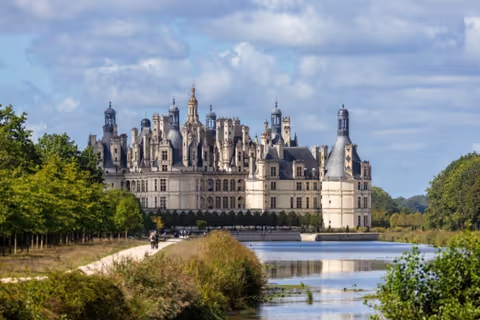
From September 26, 2026, to January 24, 2027, the Domaine national de Chambord invites visitors to explore the castle’s culinary history. From Francis I to Lady Diana, relive history through four dining experiences.

At Chambord, history can also be discovered at the table. From September 26, 2026, through January 24, 2027, the Domaine national de Chambord is hosting *Les Festins de Chambord*, an exhibition dedicated to four centuries of culinary traditions and the art of the table. Set up on the second floor of the keep, around the famous double-helix staircase, the exhibition showcases four meals associated with iconic moments in the castle’s history.
Four Tables to Journey Through the Centuries
The journey begins in 1539, with a supper conceived to mark the visit of Francis I and Emperor Charles V. Sources do not confirm that such a feast actually took place; the meal on display is therefore a scientific reconstruction based on 16th-century iconography and customs. Since most of the silverware from this era has not been preserved, the exhibition makes use of 3D modeling and printing to recreate these pieces. Music, scents, and replica dishes complete the immersive experience.
Next, we travel to 1685 for a dinner for thirty guests held during Louis XIV’s final stay at Chambord. A seating plan preserved at the Bibliothèque nationale de France was used to reconstruct the meal’s layout and its “à la française” service. A third table transports visitors to the 18th century, into Marshal de Saxe’s “coffee room.” Coffee, tea, and hot chocolate reflect emerging tastes and the arrival of exotic beverages in aristocratic customs. Queen Marie Leszczynska’s tea and hot chocolate set, preserved at Versailles, is among the remarkable pieces on display.
The final table takes us back to 1988, to the gala dinner held in honor of the Prince and Princess of Wales. For this reception, Sèvres porcelain, Baccarat crystal, Christofle silverware, and Puiforcat cutlery recreate the setting of the head table. Two particularly symbolic items are also on display: the dresses worn that evening by Lady Diana and Princess Caroline of Monaco.

From the Plate to the History of Chambord
Beyond these four recreations, the exhibition explores the traces left by food over the centuries. Menus from official dinners, objects from the château’s collections, archaeological artifacts uncovered during excavations, and archival documents shed light on the dietary habits and table customs of Chambord’s residents and visitors. The famous “carpe à la Chambord,” first published in 1735, is also given a fresh take thanks to an interpretation by Christophe Hay, the chef at Fleur de Loire (4 toques).
Finally, the experience continues in the estate’s restaurants, with recipes inspired by the exhibition, while the Grand Saint-Michel at the Relais de Chambord offers a menu created by MOF Joseph Viola and chef Marion Carraud. The exhibition, included in the castle’s admission price, aims to offer a different perspective on Chambord: through the objects, dishes, scents, and stories that have shaped the monument’s history.