






Short sleeves, ovens turned off… Chefs are adapting to the heat wave
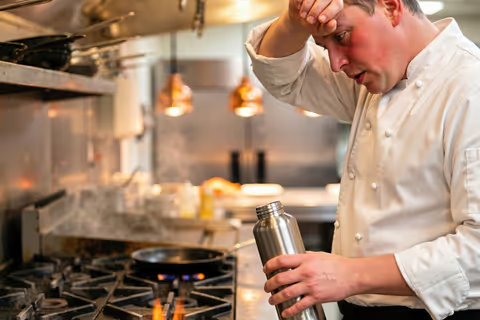
Faced with an increasing number of heat waves, chefs are changing their routines. From their stoves to their lighter jackets, these professionals are adapting their work to stay cool.

“I could have taken a plate left outside in the sun and plated the food right on it—it would have been hot enough,” says Matan Zaken, chef at Nhome (2 toques), with a touch of irony. To keep their restaurants open in June—considered the hottest month ever recorded in France—chefs had to change their routines, their organization, their cooking methods, and sometimes even their attire.
At his Paris location, the chef cut the power of the food warmer in half, turned off the plancha, and reduced the use of the grill. Matan Zaken revised his restaurant’s menu. Table butter served with the house-baked bread was replaced with olive oil, and refreshing dishes are now the order of the day—for example, the tasting menu’s appetizer features smoked summer eels with “very cold” fermented tomatoes.
Air Conditioning or Cancellations
Like one in two establishments surveyed by the Union des métiers et des industries de l’hôtellerie for its report published on June 29, Nhome has an air-conditioning system in the dining room. “It’s either that or we close. When people pay a certain price [the menu costs 155 euros], they need to be able to breathe when they sit down.” In the kitchen, however, staff now prepare dishes in T-shirts, and cooling breaks have been implemented.
According to the Umih’s analysis, 9 out of 10 professionals reported that heat waves had a negative impact on their business. In the capital’s 11th arrondissement, Eugenio Anfuso, chefat Amâlia (2 toques), is a case in point. During the heatwave in June, he had about fifteen cancellations a day: “Out of 25 seats, that’s a huge number,” he laments . “Some customers called to ask if we had air conditioning.” When the restaurant replied that it did not, many canceled their reservations.
Direct additional costs
“Renovations were planned, but the heat wave hit earlier than expected—we were caught off guard , ” says Eugenio Anfuso. Now equipped with air conditioning units recently purchased at a high cost, the restaurant has seen its customer traffic rebound. In the kitchen, sleeves have been rolled up, and fans have been installed. The gas oven remained turned off for two weeks. “ We use induction cooktops; since the kitchen opens onto the dining room, we try to keep the heat to a minimum.”
In the Aude region, where temperatures now frequently exceed 40 °C, the kitchens at La Table de Fontfroide (1 toque) sometimes reach nearly 50 degrees. But at her restaurant in Narbonne, sous-chef Mathilde Martinez says she’s relatively spared: the restaurant benefits from the natural coolness of a former abbey with stone walls.
On the menu, ceviches, carpaccios, and tatakis take center stage to avoid using gas. Ice baths have been added for herbs and certain sauces. In the dining room, customers are drinking less alcohol.
As for the staff, lighter, short-sleeved chef’s jackets have been ordered, “ but we still have to wear safety shoes,” Mathilde Martinez points out. According to the Umih, 3 out of 5 restaurant professionals report having incurred direct additional costs related to equipment maintenance, the purchase of ventilation systems, or the loss of inventory.
Long viewed as exceptional events, heat waves are now becoming a permanent factor in the restaurant industry. Between investments, culinary adjustments, and new working conditions, chefs must now learn to cook with an extra “guest”: the heat.