






Why Has This French Mustard Never Changed Its Recipe?
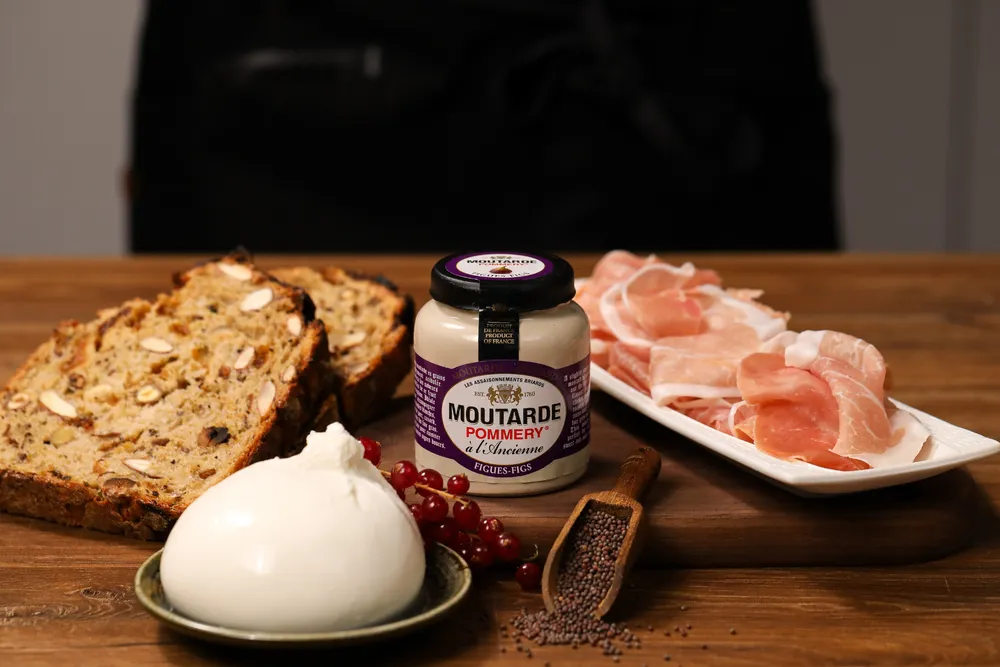
Rustic yet equally refined, Meaux mustard is perfect for both everyday meals and fine dining. The secret to its authenticity? A recipe that has remained unchanged for centuries. Its history is just as rich and flavorful as that of the men and women who built its legend.

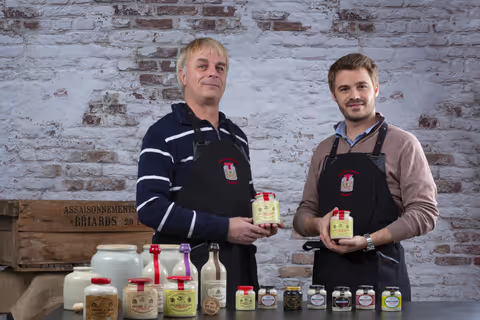
When an octogenarian exclaims to him, “That’s my grandparents’ mustard!” Kevin Chamois can’t hide his delight. Even less so when chefs Thierry Marx and Arnaud Lallement tell him they share the same memory. In fact, nearly 500 fine-dining restaurants and more than twenty luxury hotels around the world carry on the legacy of Meaux mustard in their kitchens. The latest example: Paul Pairet, who serves it at his bistro—aptly named “Moutarde”—in Singapore.
What makes it so appealing? An authentic flavor that has never changed, with a production secret jealously guarded from father to son. “We produce 300 metric tons a year, and our employees handle only the packaging— never the production,” reveals the representative of the latest generation of the Chamois family, proud to have taken over one of the last two independent French mustard makers, whose capital is wholly owned by the family.

A centuries-old tradition
Much like Obelix, Kevin Chamois fell into the pot. “When I was little, Wednesday was production day because I didn’t have school, ” he recalls, adding that he pitched in as early as age 3. At the time, production took place not in Meaux, but about twenty kilometers away, in Lagny-sur-Marne, where the Chamois family produced the spirit vinegar essential for making Meaux mustard. As early as 1865, the Vinaigrerie du Lion was supplying it to the Pommery family—which is not related to the Champagne house—the first custodians of the Meaux mustard recipe. It all began in 1760, when Jean-Baptiste Pommery was entrusted with the secret recipe by a dignitary of the Vieux-Chapitre, a sort of refectory located adjacent to Meaux Cathedral.
In this corner of France, known for its millstone limestone—used to make the millstones for crushing mustard seeds, just as a miller grinds wheat to make flour—the history of mustard is first and foremost linked to the Church. In the Middle Ages, monks used it as a poultice to treat rheumatism. They ground the mustard seeds and placed them between two linen cloths soaked in boiling water. From the pharmacy, the condiment made its way to the dinner table to mask the taste of game that had gone off after hunting parties. In 1632, Meaux mustard became the official mustard of the royal table.
The Chamois family began writing its own chapter in 1949, when it became the new manufacturer of Meaux mustard. At the time, Grandfather Chamois launched an export campaign for Meaux mustard, which found its way into many European homes. The price of fame is imitation: the Meaux condiment became the subject of numerous counterfeits. It eventually became a registered trademark in the 1970s, forever linking the name of the family that first brought it to prominence: Pommery.

The Ingredients of Success
While several generations have passed the torch without ever changing the recipe, the stoneware jar used for Meaux mustard has also been a constant presence. It helps minimize the harmful effects of temperature fluctuations. Preservation is all the more optimal because the material is opaque and protects the contents from UV rays. Thanks to this container—which has become the visual symbol of the Meaux condiment—it does not need to be refrigerated, unlike Dijon mustard, whose name is a generic term. “Since the husks are removed from the seeds, Dijon mustard has a shorter shelf life because it oxidizes, ” explains Kevin Chamois. What’s more, the mustard seeds are ground twice, revealing what will become one of its defining characteristics: its pungent flavor.
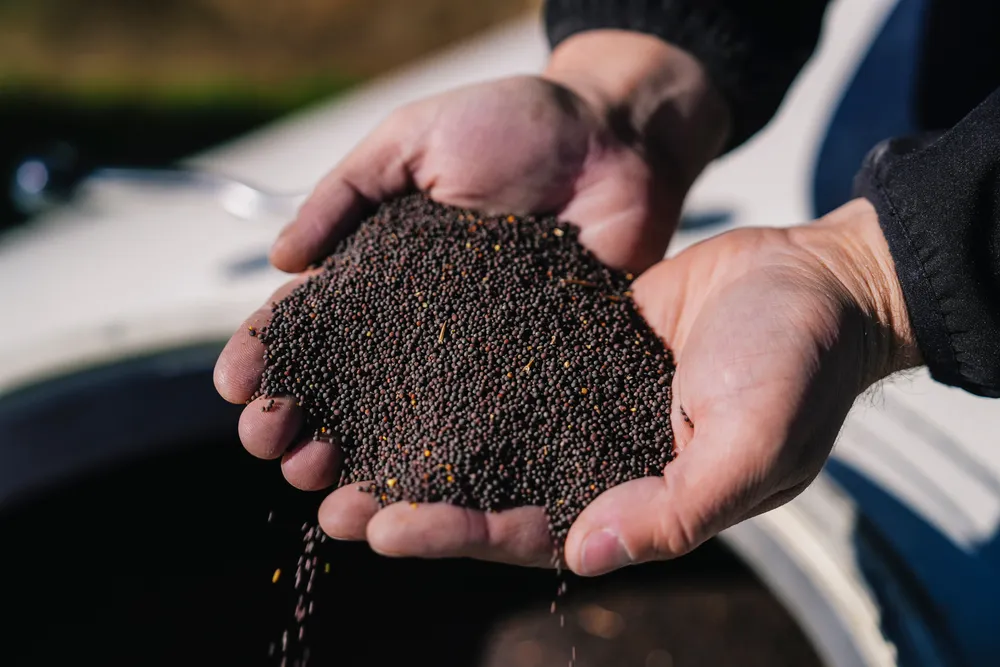
Another key difference: Dijon mustard may contain wine vinegar, whereas Meaux mustard is made exclusively with spirit vinegar. On the palate, it stands out for its mellow flavor and grainy texture, due to the presence of whole brown seeds of the Brassica juncea variety. These are essential to defining an “old-fashioned” mustard! The seeds are harvested from fields located between Pithiviers, Seine-et-Marne, and the Oise. In Meaux mustard, they account for between 60 and 80 percent of the supply, depending on weather conditions. The remainder is sourced from Canada. “The challenge is finding farmers willing to grow them,” explains Kevin Chamois. The goal, however, is clear: to produce Meaux mustard using 100% tricolor seeds by 2030.
This article is excerpted from the Paris Île-de-France 2027 guide. It is available in bookstores and on the Gault&Millau e-shop.