At Le Petit Nice, Lightspeed streamlines the behind-the-scenes operations of an exceptional experience
In Marseille, the hotel-restaurant Le Petit Nice must manage a range of activities, from fine dining to the bar and hotel operations. With Lightspeed, the establishment is relying on a unified ecosystem to streamline its operations.
Publirédactionnel
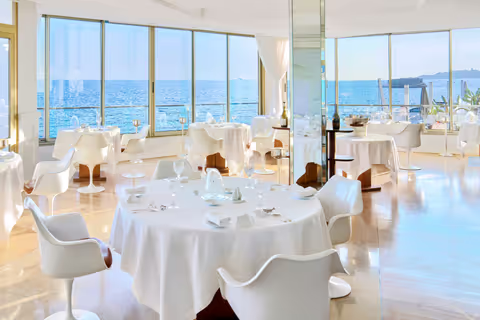
At a hotel like Le Petit Nice, the guest experience depends as much on the food served as on the staff’s ability to provide seamless, attentive, and discreet service. Behind the hotel and its gourmet restaurant (4 toques) are also Le 1917 bar, in-room dining, and services offered around the pool. This multi-faceted operation requires perfectly coordinated organization. “We have several points of sale operating in the same location that are interconnected, yet also very different,” explains Louis Vallois-Beton, director of Le Petit Nice. The challenge was to have a tool that was both comprehensive and easy to use, capable of supporting the teams in managing payments, stock, inventory, and billing.
Unifying the Hotel and Restaurant Operations
This pursuit of seamless operations is achieved, in particular, by integrating Lightspeed into the hotel management system. For a guest staying several days at Le Petit Nice, purchases made in the establishment’s various areas can thus be directly linked to their room and consolidated onto a single bill. This approach simplifies the guest experience while making the teams’ work easier through centralized management and the elimination of duplicate data entry. “For the guest, it’s convenient not to have to pay every time, ” notes Louis Vallois-Beton, who also emphasizes the improved efficiency for the staff, for whom this centralization helps “keep the wheels turning smoothly.”
This integration also extends to inventory management, since each purchase is automatically recorded in the inventory tracking system. Teams thus have a more accurate view of the most in-demand items, restocking needs, and any discrepancies, with data that enables them to anticipate purchases and refine business management. Beyond the time savings in day-to-day operations, the tool thus becomes a true decision-support tool.
Precision as an Extension of the Action
In a fine-dining restaurant, however, efficiency must not come at the expense of precision. Allergies, preferences, dish modifications, or special requests must be communicated unambiguously between the dining room and the kitchen. The Kitchen Display System ( KDS) helps organize this information and deliver it immediately to the relevant teams.
“In a fine-dining restaurant of this caliber, the accuracy of information is fundamental,” emphasizes Louis Vallois-Beton. An allergy, in particular, leaves no room for approximation. The system obviously does not replace human interaction, but complements it by ensuring the secure transmission of information throughout the service.
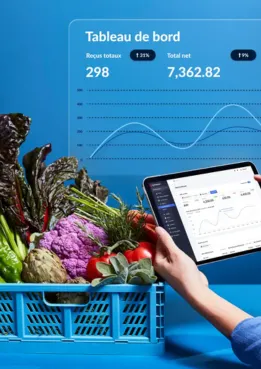
The final stage of the guest’s experience—payment—meets the same standard of discretion. With Lightspeed Payments and table-side payment, the transaction is seamlessly integrated into the service, without disrupting the guest’s experience. Staff minimize wait times and benefit from a more secure process, particularly when verifying amounts. At the same time, the data collected provides Le Petit Nice with a more detailed understanding of its business. Menu or dish performance, changes in average check size, sales by location, and inventory tracking: these are all metrics that enable decisions based on objective data, while also helping to refine purchasing and management control. For Louis Vallois-Beton, this is ultimately where the tool’s value lies: “Incorporating more technology into our operations so that, paradoxically, we can rely less on it in our customer relationships.”