





Mortar and Pestle: How to Choose the Right One for Your Kitchen
Wood, granite, marble, or stainless steel: Since prehistoric times, mortars and pestles have been used to grind spices and herbs without ever altering their aromas. How do you choose the right one?

Peeling, crushing, grinding, mashing, milling... Few utensils can claim to have survived so many eras with a design that has remained virtually unchanged. The mortar and pestle are among them: for ten thousand years, their operation has relied on the same basic elements—a container, a pestle, and the strength of the arm.
A tool as old as prehistory
The earliest evidence of mortars dates back to the Neolithic period, around seven thousand years before our era. At that time, they took the form of hollows carved directly into rock, while the pestles were generally polished pebbles. They were used to crush grains, seeds, plants, or roots, both for food and for medicinal preparations. The mortar subsequently appeared in many ancient civilizations: evidence of it can be found in the Ebers Papyrus, dating from around 1550 B.C. and considered the oldest surviving medical document to date.
Over the centuries, its shape has changed little. This is undoubtedly what makes it unique: despite the advent of electric appliances, the mortar remains just as effective at working with textures and preserving flavors. Unlike blades, which cut and can heat ingredients, the mortar gradually crushes them, releasing aromas and flavors while maintaining perfect control over textures.
Wood, stone, or metal: choosing the right mortar
Not all mortars have the same effect on ingredients. The weight, texture, and porosity of the material influence both the grinding process and ease of use. Wooden models appeal for their light weight and ease of handling; they’re ideal for beginners and well-suited for delicate herbs and soft spices. Wood doesn’t alter flavors, but it’s sensitive to moisture and can absorb odors or colors over time.
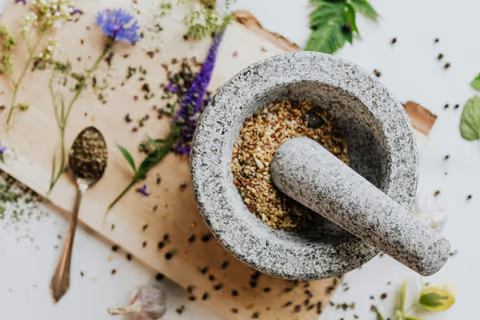
Heavy, sturdy, and naturally rough, granite mortars allow you to quickly grind spices, seeds, or thick pastes, thanks to effective friction on almost all ingredients, but they require careful maintenance. Cast-iron models prioritize strength and durability, with a slightly rough surface that also facilitates grinding. Smoother and cooler to the touch, marble absorbs few odors and minimizes material loss: it is the traditional material for Italian mortars used to prepare pesto. Ceramic and porcelain offer a neutral surface that does not alter flavors, but they remain fragile and are best suited for light preparations. Finally, stainless steel models are appealing for their ease of maintenance: hygienic, durable, and long-lasting, they are particularly common in professional kitchens.
All that’s left is to find the one that best suits your needs, your favorite ingredients, and the cooking experience you’re looking for.

- The Authentic Choice. Small tabletop mortar and olive wood pestle, handmade, 7 cm. Bérard France, 20 €.
- The iconic one. Ceramic mortar and pestle, 0.3 L. Le Creuset, €49.
- The Indestructible One. Black cast-iron Nori mortar with pestle and bronze-colored knob, 11 cm. Beka, €35.
- The well-designed one. Steel mortar and pestle with silicone base and lid. Mastrad, €41.95.
- The Versatile One. Mortar and pestle with a bamboo lid, Dash™, Ø 15.5 cm. Joseph Joseph, €54.99.
- The elegant one. White marble mortar with matching pestle. Maison Cuilleret, 40 €.
- The practical one. MAAHE porcelain mortar and pestle, with a silicone handle. OGO Living, €49.95.
- The poetic one. Mortar bowl with spout, hand-shaped pestle, Brach stoneware. Subo, €35.
This article is excerpted from Gault&Millau magazine No. 14. It is available in bookstores and on the Gault&Millau e-shop.