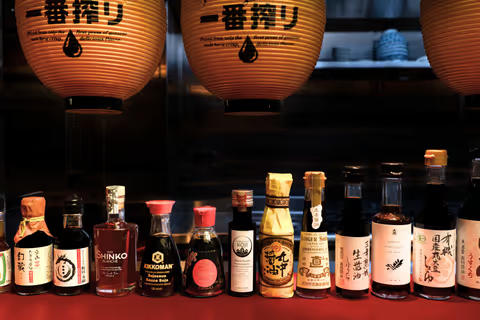
Shiro, usukuchi, koikuchi, saishikomi or tamari: what qualities should be attributed to the different soy sauces marketed in France? To find out, a panel of judges tasted thirteen sauces of different types, qualities and manufactures. A test bench of varied tastes in which everyone will find their ideal shoyu.
Jean-Baptiste Meusnier, founder of the restaurants Kodawari Ramen Yokocho (Paris, 6ᵉ) and Kodawari Ramen Tsukiji (Paris, 1ᵉʳ), whose settings recreate iconic Japanese locations. Laetitia Gautheron, wine editor and taster at Gault&Millau. Géraldine Meignan, freelance food journalist and author of Chaud devant ! (Bayard).
The methodology
Gathered at Kodawari Ramen Ueno (Paris, 1st), Jean-Baptiste Meusnier's new address, the jury blind-tasted thirteen soy sauces. Each juror had to evaluate different criteria and award a score out of 20. These included visual appeal, umami, texture, balance and saltiness.
Nakasada Shoten (Tamari)
100% soy sauce, fermented and matured for three years in cedar barrels Jury testimonials: "I like it a lot, I have the feeling it's a long fermentation "; "It's quite powerful and punchy, I like its clean attack "; "You could almost drink it for breakfast, it's a joy!"(Laughs).
White sauce from traditional fermentation in cypress barrels. "An intense color and lots of umami";"A very complex sauce with a surprising contrast between color and taste";"Marked by a certain salinity reminiscent of dried fish".
17/20
7.90 € per 10 cl
Shinko (Shiro)
Artisanal white sauce produced in Saint-Émilion, fermented in old Bordeaux barrels."Sentiment qu'elle est infusée avec du bois de cerisier ce qui lui apporte un équilibre supplémentaire"; "Difficile à définir mais assez fruitée with an interesting complexity and a certain acidity"; "The whole is very harmonious with a slightly spicy finish".
A clear sauce, concentrated in salt and naturally fermented. "I think this usukuchi is particularly suited to cooking. In Japan, it's used to season cooking without giving too much color. The quality is good, but it's very salty "; "A touch of toasted cereal, but it lacks length in the mouth".
Japanese-stylesushi sauce made in China."You can tell it's a koikuchi, but with a plastic taste at the end and a salty bitterness that lingers"; "A flagrant lack of balance"; " A very unpleasant finish".
9,5/20
2.20 € for 15 cl
Kikkoman (Koikuchi)
Sauce naturally fermented for several months, made in the Netherlands "Frankly, it's honest for a standard soy sauce ";"It doesn't make waves, neither too intense nor not intense enough, but there's a vegetal side that gets in the way"; "A balanced sauce, rather long on the palate."
Artisanal Japanese sauce, ancestral method and natural fermentation "Back to something good, it feels good (laughs). The color is beautiful, there's umami, it's balanced in salt, you want to cook with it" ; "A sauce well marked by salinity, the finish is gripping "; " A very woody side".
Soy sauce made using a traditional method, infused with Japanese Sansho berries, similar to a mountain pepper. " A must-have seasoning at home.i love it, I can see myself eating it with rice and grilled meat "; "The pepper gives it a nice energy "; "It's fun because it has an anaesthetic effect on the tongue".
Traditional organic sauce, naturally fermented for 24 months in cedar wood "A quality sauce with lots of texture, syrupy to perfection"; "A silky side, a rather consensual whole. The salt is imposing, but it integrates well at the end".
Traditional soy sauce flavored with fresh ginger from Kochi Prefecture "It's reminiscent of ponzu sauce"; "Thesauce is rather easy, it's not too powerful and there's plenty of ginger on the finish";"This astringency on the finish gives it citrus notes".
Soy sauce from natural double fermentation in cedar barrels "Wow! makes you want to come back"; "Same feeling. Wow! A lot of pleasure with this sauce and a superb texture"; "Theumami is very present, the finish very elegant".
Double fermented organic soy sauce, made from unpasteurized lentils from Saint-Flour (Cantal) and quinoa from Anjou. "What kindof honey is this? It's quite pleasant, but it's not a classic product at all!"Yes, it's quite sweet, but the whole is harmonious";"There's a nice aromatic complexity".