This wine has survived wars and frauds... 10 bottles to appreciate
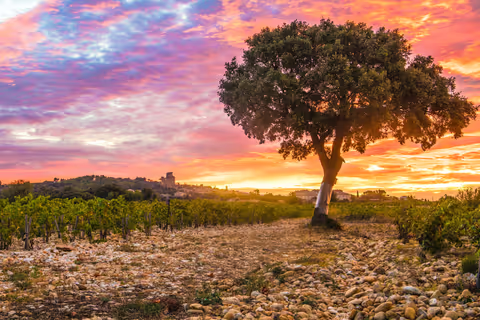
Located on the left bank of the Rhône, north of Avignon, Châteauneuf-du-Pape is the largest cru in the Rhône vineyards, and arguably the most emblematic of the southern Rhône Valley. With 3,150 hectares of vines, it is renowned for its diversity of grape varieties - eighteen in all. But Châteauneuf-du-Pape also has a history that goes back several centuries, carried by the winegrowers who pioneered what would become the AOC (Appellation d'Origine Contrôlée) and the INAO (Institut National des Appellations d'Origine).
The first written mention of wine in the region dates back to 1157, but it was in the XIVᵉ century, with the installation of the papacy, that Avignon became one of the most important cities in Europe. The village vineyards, then called de Châteauneuf-Calcernier, saw their reputation spread beyond the borders of France.
Despite the wars and the phylloxera crisis, its renown continued unabated, and it was exported as far as the United States. Faced with these abuses, the wine industry began to structure itself at the beginning of the XXᵉ century, in order to protect its wines. A syndicate was created in 1923 and, under the impetus of its president, Baron Pierre Le Roy, the winegrowers established various requirements and thus laid the first foundations of the appellations d'origine contrôlée. In 1936, Châteauneuf-du-Pape became one of the first six AOCs in France. The following year, the wines were bottled in a special bottle bearing the vineyard's coat of arms, adding a protective visual identity to the appellation.
Domaine Barville - Roussanne 2024
The nose is pleasantly vegetal: dried rose, thyme, lemon verbena. Spices are also present, with aromas of cinnamon and licorice stick. A hint of milk chocolate and toast complete the picture. On the palate, in addition to the vegetal aromas, fruit (pear, green mandarin) makes an appearance, giving the wine a gourmet touch. The youthful finish is marked by beautiful bitters. A dynamic, joyful wine.
The nose plunges us into a fresh, delicious fruit salad: peach, plum, strawberry, citrus and pear. Aromas of toast and freshly-ground coffee awaken the taste buds. On the palate, the balance between the roundness of the fruit and the fleshy texture is clearly present. The ageing brings strength and character. Notes of garrigue on the finish give an impression of freshness. Generous yet elegant.
This white reveals a very fresh nose of white fruit, pineapple, elderflower and freshly picked mint. A gentle touch of puffed rice is added. On the palate, the attack is light, followed by a full body with luscious notes of yellow and tropical fruit, ending with an invigorating finish of eucalyptus and cardamom.
The nose takes us to the table at breakfast time: café au lait, hot chocolate for the kids, buttered toast, honey for some, mirabelle plum jam for others and brioche for the greediest. on tasting, the wine is smooth and delicate. Notes of bright fresh fruit carry us through to a dynamic finish of white pepper. A flattering, racy wine.
This wine is full of pleasure, with aromas of apricot, grape, quince, lemon and mint. These are echoed on the palate, accompanied by notes of Zan, eucalyptus and even raspberry, to give a dynamic, ripe whole. Decanting will refine the substance and the pretty bitters on the finish, but the tasting unfolds like a song that stays in your head.
92/100
23 €
Domaine de la Solitude - Vin de la Solitude 2024
The first nose expresses that lovely toasty reduction sometimes found in white Burgundies. Aeration allows it to develop aromas of white chocolate, dried blackcurrant and candied kumquat. The power and intensity of apricot, melon, jasmine and sweet spices are highly appreciated. The buttery, roasted finish features pretty bitters. A wine best cellared for a few years to appreciate its full maturity.
Domaine Raymond Usseglio et Fils - Pure Roussanne 2024
A young, energetic wine with complex aromas of fennel seeds, white flowers, pepper and Corsican clementine. A touch of gunflint is also present. Fresh on the palate: notes of mango and passion fruit mingle with mint and lime zest. Enjoy it now, in its youth, or with the patina of a few years. try it with scallop carpaccio, passion fruit and freshly ground pepper.
A first winter nose with smoky notes, like an extinguished fireplace, a walk in the forest that smells of pine and cedar, and the warming return with hot chocolate. Then the sun comes out and the red and black fruits arrive. Cherry, blackcurrant and raspberry add sweetness and a hint of tartness to the explosively saline finish.
The wine shows some signs of evolution, with a silky texture and aromas of honey, beeswax, tropical fruit and tonka bean. Although a pleasant pastry sensation of vanilla crème brûlée remains, the wine is airy and full of freshness. The salinity is matched by the ripe fruit and spices that season the whole, bringing great aromatic amplitude. A wine with great ageing potential.
A full-bodied, fleshy wine, but with a body that never sags thanks to its fine tension. Acacia honey, dried pear, shortbread and marshmallow mingle with aromas of citrusa long, rich, fresh wine that's a pleasure to drink. A long, rich, fresh wine.
This wine makes you hungry right from the start, taking you away to an impression of prime rib cooked with vine shoots. It's smoky, spicy and even larded. Notes of apple and dried apricot join the aromas, giving a tangy sensation. An invigorating, muscular wine that calls for a second glass.
On the nose, aromas of white fruit mingle with spicy notes, with a floral and slightly vegetal, almost spicy dimension. There's a marked freshness, reminiscent of the zest of a ripe lemon. On the palate, the attack is lively, before giving way to a fleshy, expressive body that retains balance and salivation. The finish, carried by delicately integrated warm spices, prolongs the whole with precision. A straightforward, controlled wine, without exuberance, but with an assertive character.