





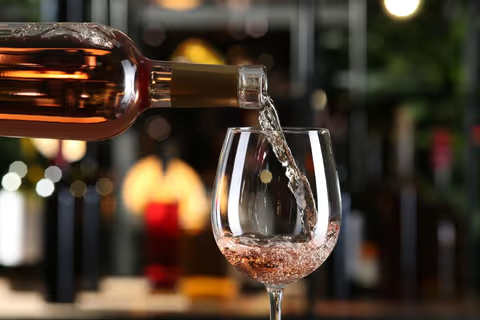
Why is rosé pink?
To obtain its color, rosé follows the same winemaking methods as red and white wines, with a few minor differences.

Rosé is always made from red-skinned grapes. All red grape varieties conceal a white flesh, which is tinted by contact with the color-pigmented skin. It's this flesh that gives the wine its color and certain aromas.
Wineries can choose to produce two types of rosé: one full-bodied and full-bodied, the other lighter and lighter. The former requires a vinification approaching that of a red wine, the latter that of a white wine.
Rosé de saignée, like a red
This is known as rosé de saignée (or rosé de macération). Whole grapes, with or without their bunches, macerate together in a vat. The juice is extracted under the weight of the berries, and skins and liquid mingle. Just as in the early stages of a red wine, the pigments color the wine.
In the case of rosé, maceration is short, generally lasting from a few hours to two days, which induces only a slight coloration. Beyond color, the longer the maceration, the windier, more tannic and even more complex the rosé. Some rosés, such as Tavel, are even destined for aging.
Direct-pressed rosé, like a white
Direct-pressed rosé, with its clever name, is based on the vinification method used for white wine. Whole or destemmed bunches are placed in a press to slowly recover the juice. The intensity of contact with the skins depends on the speed of the operation, and the juice will be more or less marked in color, substance and taste. The result is generally a fluid rosé that can be drunk quickly.
for both methods, the next step is to ferment the juice in another container. Depending on their thickness, they may then be aged in barrels, if you're aiming for a gourmet rosé destined for the table.
Other rosés
As a reminder, it is forbidden to blend a red wine with a white wine and call it rosé. Except in Champagne. The region can produce rosés de saignée (from maceration), but mostly blends rosés. A white wine, made from Chardonnay for example, is blended with a red wine, made from Pinot Noir and/or Pinot Meunier, before secondary fermentation in the bottle.
What about blouges? Are they rosés? White and red grapes - contracted for the term - macerate and ferment together. They color the wine a light red, with the freshness and aromas of a white wine. Not quite rosé, not quite red.