He dared to make balsamic vinegar in Charente: the result has chefs amazed
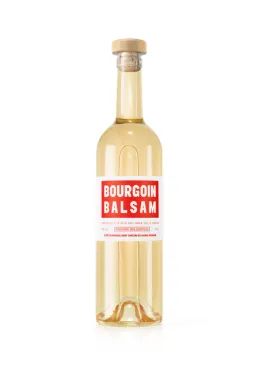
The Modena region in Italy does not have a monopoly on its famous balsamic vinegar. Proof of this is this gem from the Bourgoin family—a delicately fruity vinegar named Balsam. A delicious discovery showcasing another form of craftsmanship, right in the heart of the Cognac barrels.
A natural remedy with a history as ancient as it is fascinating, balsamic vinegar from Modena has, over time and thanks to the growing interest of chefs, become the “black gold” of gastronomy. This “black gold” commands astronomical prices when certain vintages have aged for up to a quarter of a century. In France, it is now well known to both professionals and the general public, but few venture to produce it themselves. However, if one sets aside the protected designation“Modena,” it can certainly be made.
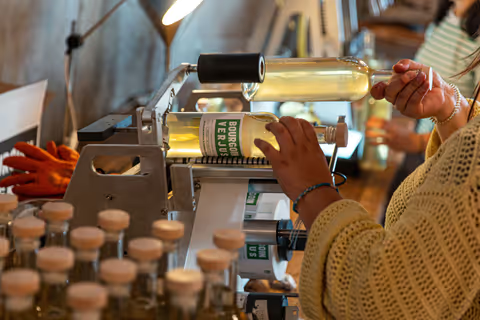
Frédéric Bourgoin, in his forties, representing the fourth generation of winemakers based in Tarsac, in the village of Saint-Saturnin in Charente, had this idea about ten years ago. “ An inspired winemaker and a runaway alchemist,” as he likes to describe himself, Frédéric experienced the economic crisis in the Cognac wine region during his childhood and youth. Over the years, as he matured, he realized he had to break free from the codependent relationship with the major local houses and diversify at all costs. The production of Bourgoin verjus is one example of this. In 2017, Frédéric traveled to Emilia-Romagna to study the processes and immerse himself in the delightful world of balsamic vinegars and their aging, with their subtle balance between tartness and acidity.
This immersion was made easier by a common thread: the grape variety. In Cognac, the vineyards are dominated by Ugni Blanc. In the Modena Valley, it’s Trebbiano Bianco Toscano—in other words… Ugni Blanc as well. Frédéric returned convinced that he could produce vinegar just like in Modena right here in his own terroir. In his luggage on the return trip, he carried vinegar mother cultures— “living vinegar” and its acetobacilli (acetic acid bacteria)—to launch his Cognac adventure.
A Slow Process
Seven years later, the time had come for the first bottling of“Balsam.” It took that long to reach the required six degrees of acetic acid (6 °ac). The production process took place in two distinct stages. The first involves cooking the grape must in a cauldron, gradually raising the temperature so that the water evaporates and the natural sugars become concentrated. The resulting substance—a sort of molasses—is then transferred to barrels to undergo alcoholic fermentation. The second stage, carried out in parallel, involves allowing the grape must—now wine—to begin its acetic fermentation and transform into vinegar. Once this process is complete, Frédéric Bourgoin blends the two batches—the cooked must and the wine vinegar—taking into account their viscosity and sugar content, before returning the mixture to barrels—and not just any barrels. He uses old barrels, about thirty years old, that previously held cognac—barrels from which the wood imparts very few tannins but releases a delicate aroma and provides indirect moisture.
When you realize that, for a 350-liter barrel of cognac, 17 liters are absorbed into the wood fibers, it’s easy to grasp this effect of indirect wetting. Frédéric’s goal is to achieve a result that isn’t overly woody or too dark in color, so as not to darken the dishes in the kitchen—like this balsamic velvet, which resembles squid ink... What he’s looking for is an aromatic delicacy—a result he achieves after seven years—all guaranteed free of artificial colors, added sugar, and preservatives.
Delicate Pairings in the Kitchen
Le Bourgoin Balsam offers a powerful nose, entirely defined by fruit aromas— grape pulp, hints of mango, and a floral finish reminiscent of lilac—all of which inspire delicious pairings such as deglazing fish, reducing sauces, and, of course, various salad dressings and marinades.
Among them are those who visit Saint-Saturnin to learn more about the house’s cognacs, customers at fine food shops, and nearly two hundred chefs who are blown away by this crystal-clear nectar—a condiment that opens up a world of possibilities.