






Polish cuisine: a sensitive journey to the heart of traditions and flavors
Woven from ancient gestures, seasons and multiple influences, Polish cuisine offers a vibrant universe where each dish reveals a living heritage and a unique gourmet poetry.
Polish cuisine unfolds a sensory universe where each dish tells an intimate story, almost a culinary galaxy guided by the seasons, traditions and inherited gestures. Its flavors draw from gardens, orchards and forests, where apples, plums, blueberries, wild strawberries or mushrooms shape a rich repertoire, nourished by the terroir and a fusion of flavors, cultures and inspirations - Jewish, Lithuanian, German, Italian - visible in every region.
Pierogi, żurek and the art of inherited flavors
At the heart of this generous table shine pierogi, true national emblems, hand-shaped and stuffed with cheese, cabbage and mushrooms, or bright blueberries picked in the forest. They are served browned in butter, garnished with golden onions or bacon. Another must-try is żurek, a sour soup made from fermented rye sourdough, flavored with garlic and marjoram, with potatoes, hard-boiled eggs and sausage. These fermentation techniques, which are still very much alive, bear witness to ancient know-how, once essential for preserving foodstuffs.

crayfish, smoking and popular genius
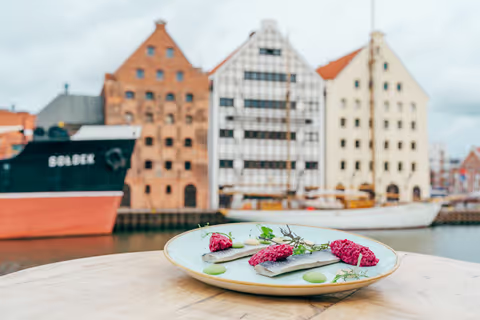
Once ubiquitous on both noble and popular tables, crayfish were used to make refined soups, jellies and sauces that were the pride of old Polish cuisine. Forgotten for several decades, today they're back in vogue, especially at festive occasions, where they reappear as a nod to a revived culinary heritage. Polish cuisine also features smoked meats, Baltic fish and vegetables such as beet, cabbage and potatoes. Placki ziemniaczane (potato pancakes) embody this popular genius: grated, peppered and deep-fried, they can be enjoyed plain, sweetened or topped with goulash. on the other hand, in the mountains, smoked oscypek sheep's cheese is enjoyed with cranberry jam, while elsewhere, Kashubian strawberries, fish from the Masurian lakes or Tatar specialties from Podlachie reign supreme.

When history writes gastronomy
This culinary wealth owes much to history. After her marriage to Sigismund I in 1518, Queen Bona Sforza brought the spirit of the Renaissance to Poland, introducing many vegetables from Italy, such as carrots, parsley, celery, cabbage and leeks. Paul Tremo, the French chef to Poland's last king, Stanisław August Poniatowski, is also worthy of mention, combining European influences with unrivalled refinement.
This diversity reflects the country's history of shifting borders, exchanges and encounters. Jewish, Lithuanian, Ukrainian, Tatar, Germanic and Austro-Hungarian influences meet in the pans. A simple slice of apple charlotte, crisp under its crumble, says as much as Toruń gingerbread or buckwheat pies, how traditions and migrations have built a plural culinary heritage.
The gourmet renaissance of contemporary Poland
Today, Poland is reinventing this treasure trove: contemporary restaurants, booming plant-based cuisine, seasonal markets, lively food halls and gourmet festivals are all part of a dynamic revival. The Poles, curious and heirs to age-old recipes, willingly combine local products with inspirations from elsewhere. They champion a warm, family-style cuisine, served around a generously-laid table, where dishes are shared as much as stories.
So, to taste Poland is to travel through a land of living traditions, fragrant forests, smokehouses and orchards, a land that transforms every meal into a journey through centuries, regions and cultures. A veritable constellation of flavors.
For more information, visit https://www.pologne.travel/fr/gastronomie/